How to Launch on Product Hunt: The 2026 Checklist & Playbook
A free, step-by-step Product Hunt launch checklist — plus the full playbook underneath it: when to launch, whether to use a hunter, and what to do hour by hour on the day.
Step-by-step checklist
A comprehensive, actionable checklist that walks you through every stage so nothing slips through the cracks.
Curated resources
Hand-picked guides, tools, and references to go deeper on each step whenever you need more context.
Track your progress
Tick items off as you complete them, watch the progress bar fill up, and celebrate each milestone.
Pre-launch 💡
Brainstorm the idea of your startup and build an MVP or prototype
0/
-
High
Identify a problem to solve or a need to fulfill
The first step in creating a successful product is to identify a problem that needs to be solved or a need that needs to be fulfilled. This can be done by brainstorming with your team, friends, and family, or by conducting market research. Once you have identified a problem or need, you need to understand the pain points that people are experiencing. What are the challenges that they are facing? What are the frustrations that they are dealing with? The more you understand about the problem or need, the better equipped you will be to create a solution that people will love.
Want to start a startup? - Paul Graham How to Get a Startup Idea: 10 Actionable Frameworks - Failory How to Get and Evaluate Startup Ideas - Startup School (YouTube) -
High
Brainstorm and research potential solutions
Once you have identified a problem or need, you need to brainstorm and research potential solutions. This will help you to narrow down your options and to choose the best solution for your target market. When brainstorming solutions, be sure to think outside the box and to come up with ideas that are both creative and feasible.
How to brainstorm product ideas - Aha! The Startup Idea Matrix: How to Brainstorm New Startup Ideas - Hacker Noon -
Medium
Start a waitlist with LaunchList to validate your idea
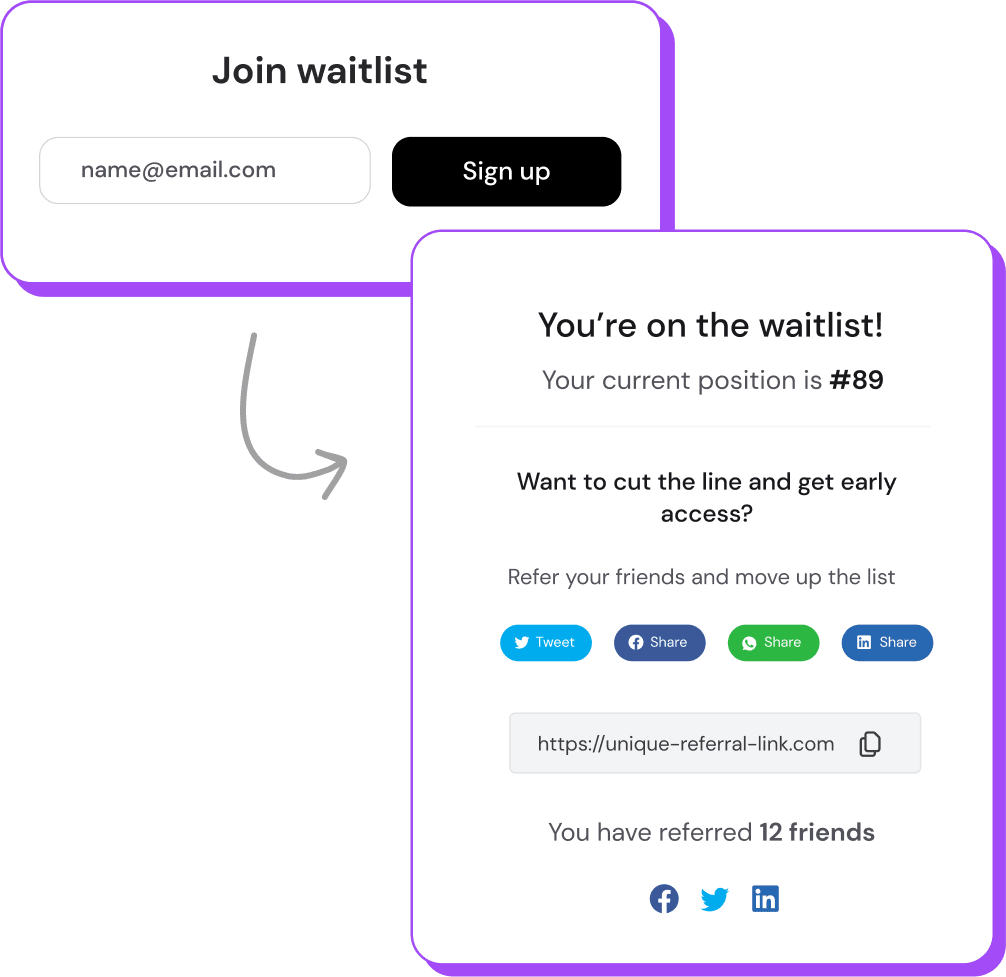
Once you have a prototype or MVP of your product, you can start validating your idea with potential users and customers. One way to do this is to start a waitlist with LaunchList. LaunchList is a platform that allows you to collect emails from people who are interested in your product. This is a great way to get feedback from potential users and customers and to gauge interest in your product before you launch it on Product Hunt.
How to Create a Waitlist for Your Product Launch Build The Waitlist Before You Build Your Product - Alex Ponomarev Sign up for LaunchList Learn more about LaunchList Other tools to build a waitlist -
High
Create a minimum viable product (MVP) or prototype
Once you have validated your idea, you can start building your product. You should create a minimum viable product (MVP) or prototype to test your idea with potential users and customers. An MVP is a product with just enough features to be usable and to test the market. A prototype is a working model of your product that can be used to test the design and functionality.
How to Build an MVP in 2023: Step-By-Step Guide + Examples - Failory How to Plan an MVP - STARTUP SCHOOL -
High
Test your product with potential users or customers
Once you have created your MVP or prototype, you should test and validate your product with potential users and customers. This will help you understand if your product solves a real problem and if people are willing to pay for it. There are a number of ways to test your product, including surveys, interviews, and usability testing.
MVP Testing: Techniques, Strategies, and Plan - Codica -
High
Refine and improve your product based on feedback
Now that you have tested and validated your product with potential users and customers, you should refine and improve your product based on their feedback. This will help you to create a product that is truly user-friendly and that people will love.
-
High
Get ready for launch on Product Hunt
Once you have refined and improved your product, you are ready to launch it on Product Hunt.
Getting Started 🌱
Begin by creating a PH account and setting up your profile
0/
-
High
Set up your Product Hunt account
This is the first step to launch your product on Product Hunt. You need to create an account with your email or social media login and verify it.
Sign up for Product Hunt How to create a Product Hunt account -
Medium
Add awesome description to your account
This is where you introduce yourself and your product to the Product Hunt community. You should write a short and catchy description that highlights your skills, experience, and passion.
How to write a great Product Hunt bio -
Low
Add relevant contact links to your account [Twitter and website]
Provide more information and ways to connect with you and your product. You should add links to your Twitter and website, as well as any other platforms where you have a presence.
-
Medium
If you're starting up, engage with the community
Engage with the Product Hunt community by responding to comments and answering questions. Be friendly and open to feedback, as it can help you improve your product.
What are the best ways to engage a community?
Preparing for PH Launch 🔧
Get ready for an exciting Product Hunt launch by creating a page for your product
0/
-
High
Make sure your product website/app is ready to go with a clear value proposition and a call to action 📝
Ensure that your product's website or app is fully prepared for launch. It should have a clear and compelling value proposition that communicates the benefits of your product to potential users. Additionally, include a strong call to action that prompts visitors to take the desired action, such as signing up or purchasing your product.
My step-by-step guide to landing pages that convert - Harry Dry (Indie Hackers) Complete Guide to Landing Pages - QUICKSPROUT Landing Pages Explained -
High
Write an enticing title that summarizes what your product is and does 📝
Craft a captivating title that effectively summarizes the essence and functionality of your product. The title should grab attention and convey the primary purpose or unique selling point of your product to attract potential users.
How to post a product on Product Hunt -
Medium
Write a detailed description that explains the problem you are solving, how your product works, and what makes it unique 💡
Provide a comprehensive and informative description of your product. Clearly articulate the problem your product solves, describe how it works, and highlight its distinctive features and advantages. This description should effectively communicate the value proposition of your product to potential users.
How to describe your startup idea. -
High
Create a GIF or logo that stands out from the crowd 🎨
Design an eye-catching GIF or logo that stands out and grabs attention. Use visually appealing elements and creative animation to make your logo or image memorable and distinct from other products. It is best to use an image with square dimensions. We recommend 240x240. You can use a GIF for your thumbnail, but it will need to be under 3MB and not too flashy. GIFs will only animate while hovering over a post. GIFs with strobing effects, quick cuts, unreadable text, etc. are not recommended and may be edited by the Product Hunt team.
How to Post: Media -
High
Create your product images and videos that showcase your product's features and benefits 🎥
Develop compelling images and videos that effectively showcase the features and benefits of your product. These visual assets should highlight key functionalities and demonstrate how your product can provide value and solve user problems. The recommended size for images in the gallery is 1270x760.
How to Post: Media -
Medium
Select carefully the topics that best describe your product and target audience 🏷️
Choose relevant and accurate topics that align with your product and target audience. These topics will determine how your product is categorized and listed, so it's essential to select the ones that best represent your product and resonate with your intended user base.
Product Hunt Topics List Page -
High
Add relevant links to your website, social media, app store, etc. 🔗
Include appropriate links to your product's website, social media profiles, app store pages, and other relevant online platforms. These links will enable users to easily access more information about your product and engage with your brand across different channels.
-
Low
Create promo codes if you want to offer discounts or free trials to Product Hunt users 🎁
If you wish to provide special offers, such as discounts or free trials, to Product Hunt users, generate promo codes for them. Promo codes can be shared with users during the launch to encourage engagement and attract new customers.
How to add a promo code on Product Hunt? -
High
Prepare a list of questions and answers that you are anticipating from the community 📝
Anticipate potential questions from the community and create a list of corresponding answers. This preparation will enable you to respond quickly and efficiently to inquiries during the launch, enhancing the overall success of your product launch. Some questions you may want to consider include:
- How is your product different from existing solutions in the market?
- How do you justify the pricing?
- What is your product's target audience?
- Can you explain the key features of your product?
- What platforms or devices is your product available on?
- Do you have a free trial or demo version of your product?
- Are there any special offers or discounts available for Product Hunt users?
- How does your pricing model work?
- What is your plan for future updates and improvements?
- Do you have a roadmap for integrating with other tools or services?
- What problem does your product solve?
- Are there any limitations or known issues with your product that users should be aware of?
- Can you provide some insights into your team and their expertise?
-
Medium
Build an email list of potential users and customers who are interested in your product 📧
Develop an email list comprising individuals who have expressed interest in your product. This list allows you to communicate directly with potential users and customers, providing updates, exclusive content, and promotional offers to build engagement and drive adoption.
-
Medium
Reach out to influencers, bloggers, journalists, and podcasters who cover your niche and ask for feedback or promotion 📣
Engage with influencers, bloggers, journalists, and podcasters who focus on your product's niche. Seek their feedback, recommendations, or promotional support, as their endorsement and coverage can significantly amplify your product's reach and credibility.
-
High
Prepare some promotional content such as blog posts, tweets, newsletters, etc. that you can share on launch day 📣
Create promotional content in various formats, such as blog posts, tweets, newsletters, or other suitable mediums. This content should be prepared in advance and ready to be shared on the day of your product launch to generate buzz and excitement among your audience.
Before Launch ✅
Ensure everything is in place, from marketing materials to customer support, for a smooth launch
0/
-
High
Choose the best day to launch based on audience and competition ⏰
Carefully consider the preferences and behavior of your target audience when selecting the launch day for your product. Additionally, assess the competitive landscape to avoid launching on days when there is significant competition or noise. Choosing the right day can help maximize visibility and engagement with your target audience.
Know the Best Time to Post on Product Hunt - Compile Blog Launch Day Forecaster — predict upvote velocity for your slot -
High
Schedule your launch as early as possible (preferably right after midnight PST) 🚀
Aim to schedule your product launch at the earliest feasible time, preferably immediately after midnight Pacific Standard Time (PST). Launching early allows you to capture the attention and interest of early adopters and provides a longer window for exposure and engagement throughout the day.
Launch Day Forecaster — compare midnight vs. other hours -
High
Test your product thoroughly and fix any bugs or issues that might affect the user experience 🐛
Prioritize thorough testing of your product to identify and address any bugs, glitches, or issues that could negatively impact the user experience. By ensuring a smooth and seamless product experience, you enhance user satisfaction and increase the likelihood of positive reviews and adoption.
-
High
Check your landing page and product page for any typos, broken links, or missing information 📝
Conduct a meticulous review of your landing page and product page to identify and correct any typos, grammatical errors, broken links, or missing information. A polished and error-free presentation instills trust and professionalism, encouraging users to explore your product further.
-
Medium
Add a Product Hunt badge on your website to let people know that you are launching on Product Hunt 🏷️
Display a Product Hunt badge prominently on your website to inform visitors that you are launching your product on Product Hunt. This badge serves as a visual indicator, creating awareness and excitement among your audience while leveraging the reputation and visibility of the Product Hunt platform.
How to add a Product Hunt badge to your website -
Medium
Schedule your promotional content to go live at the same time as your launch 📅
Coordinate the timing of your promotional content to align with the moment of your product launch. By synchronizing the release of promotional materials, such as blog posts, social media updates, or newsletters, you create a cohesive and impactful marketing campaign that maximizes exposure and engagement.
-
Medium
Brainstorm a list of places where you can promote your product 📝
Engage in a brainstorming session to generate a comprehensive list of potential platforms and channels where you can promote your product. This proactive approach ensures that you have a range of options to explore and increases the chances of reaching your target audience effectively.
75+ Places to Promote Your Startup for Free - LaunchPedia Relaunch like a pro: 100+ places to launch, relaunch, and list your product - James Fleischmann (Indie Hackers) -
Medium
Inform your email list, friends, family, and supporters about your launch date and ask them to support you 📨
Reach out to your email subscribers, friends, family, and loyal supporters to notify them about your upcoming launch date. Request their support and encourage them to spread the word about your product. Leveraging your existing network can significantly amplify your reach and generate initial traction for your launch.
On Launch Day 🎉
Celebrate your hard work and excitement as the product is introduced to the world
0/
-
High
Submit your product as early as possible (preferably right after midnight PST) 🚀
Aim to submit your product to Product Hunt as early as you can, ideally right after midnight Pacific Standard Time (PST). By submitting early, you increase your chances of receiving higher visibility and engagement as your product will be featured for a longer duration throughout the day. The recommended time to submit is between 12:00 AM and 1:00 AM PST.
-
High
Add a creator's comment that tells your product story and invites feedback from the community 💬
Include a creator's comment when submitting your product on Product Hunt. Use this opportunity to share the story behind your product, its inspiration, and its unique aspects. Invite the Product Hunt community to provide feedback, suggestions, and engage in discussions, fostering a sense of community and collaboration.
Your first comment - Product Hunt Guide -
High
Share your product link on your social media channels, email list, and other platforms where you have an audience 📣
Utilize your existing online presence and platforms, such as social media channels and email lists, to share the link to your Product Hunt submission. This allows you to leverage your established audience and notify them about your product launch on Product Hunt, driving more visibility and potential engagement.
-
High
Engage with the Product Hunt community by replying to comments, answering questions, and thanking users for their support 💬
Actively participate in the Product Hunt community by engaging with users who comment on your product. Respond to comments, address questions, and express gratitude to users for their support. This interaction helps build relationships, showcases your product's value, and fosters a positive image for your brand.
-
Low
Follow or Tweet at people who have engaged with Product Hunt in the past
Identify and follow individuals on Twitter who have previously engaged with Product Hunt. Engage with their content by liking, retweeting, or commenting on their posts related to Product Hunt. This approach helps you connect with potential supporters and expand your network within the Product Hunt community.
-
High
Monitor your analytics and metrics to see how your product is performing and what you can improve 📈
Regularly track and analyze the performance metrics and analytics associated with your Product Hunt launch. This includes monitoring metrics such as website traffic, conversions, user engagement, and feedback received. By analyzing this data, you can identify areas for improvement and make informed decisions to optimize your product's performance.
Days after Launch 🗓️
Analyse user feedback, address issues, and strategies for continued success and growth
0/
-
High
Send an update to your subscribers and users about your results (good or bad) and thank them for their support 📨
After your Product Hunt launch, send an update to your subscribers and users, sharing the results of your launch, whether positive or negative. Express your gratitude for their support and participation, keeping them informed about the progress of your product. This transparent communication strengthens your relationship with your audience.
-
Medium
Follow up with any leads, prospects, or customers who showed interest in your product and offer them a trial or a discount 💰
Take the initiative to follow up with leads, prospects, or customers who displayed interest in your product during the Product Hunt launch. Offer them a trial or a discount as a gesture of appreciation for their engagement. This personalized approach can convert interested individuals into paying customers and nurture valuable relationships.
-
Medium
Collect feedback from your users and customers and use it to improve your product and roadmap 🤝
Actively seek feedback from your users and customers who interacted with your product on Product Hunt. Gather their insights, suggestions, and critiques to understand areas of improvement. Utilize this feedback to enhance your product's features, functionality, and roadmap, ensuring continuous growth and customer satisfaction.
How To Collect Customer Feedback - MonkeyLearn -
Medium
Analyze your launch data and learn from your successes and failures 📊
Dive into the data and metrics associated with your Product Hunt launch. Analyze the performance, user engagement, and feedback received to gain valuable insights. Identify both successes and areas that need improvement, leveraging this knowledge to refine your marketing strategies and enhance future product launches.
-
High
Celebrate your achievements and plan for your next steps 🎉
Take the time to celebrate and acknowledge the achievements and milestones reached through your Product Hunt launch. Reflect on the progress made and the lessons learned. With a sense of accomplishment, strategically plan your next steps, setting new goals and objectives for the future growth of your product.
-
Low
Share your story with us and help other makers 🤗
Share your journey, experiences, and lessons learned with the Product Hunt community and other makers. By openly sharing your story, you contribute to the collective knowledge and provide valuable insights to aspiring entrepreneurs and creators. Your story can inspire and empower others to pursue their own product development and launches.
How to Build in Public as a Founder
You have completed
0 /
Have a startup idea? Validate it with a viral waiting list.
Create a waiting listWhen's the best time to launch?
Forecast your Product Hunt upvote velocity and top-3 probability based on your day, hour, and category.
Forecast my launchHow to launch on Product Hunt: the full playbook
Short answer: pick a Tuesday or Wednesday, submit at 12:01 AM Pacific, spend four to six weeks before that building an audience you can email the moment you go live, and stay online the entire day answering every comment. The checklist above is the what. This is the why and the when.
Is Product Hunt still worth launching on?
Yes — with a caveat. Ranking in the top few of the day still drives real exposure, press pickup, and signups. But the bar has risen: the ranking increasingly rewards genuine engagement (comments, maker replies, time on page) over raw upvote count, so a mediocre product with a well-drilled voting squad no longer wins the way it did a few years ago.
Launch on Product Hunt if:
- You have a finished product, or a beta that survives scrutiny
- Your audience includes founders, makers, or early adopters
- You have four to six weeks to prepare
- You can be online for the whole launch day
Skip it (for now) if:
- The product is not ready to be picked apart in public
- Your buyers are enterprise procurement teams or non-technical consumers
- You are launching a pivot or rebrand — save the launch for the next real release
If Product Hunt is the wrong fit, it is not the only option: see Product Hunt alternatives that still drive real traffic.
The 6-week launch timeline
The most common first-timer mistake is treating Product Hunt as a one-day event. It is a six-week project with a one-day finale.
| When | Focus | What you actually do |
|---|---|---|
| Week −6 | Foundation | Lock the launch date (Tuesday or Wednesday). Start a pre-launch waitlist. Draft a tagline under 60 characters. Decide hunter vs self-hunt. |
| Week −5 | Assets | Record a 60–90 second walkthrough. Design four gallery images. Write the maker's first comment and three FAQ answers you will paste on the day. |
| Week −4 | Community | Join the communities where your users already are and be useful in them. Comment genuinely on other launches. Do this before you need anything. |
| Week −3 | Outreach | Pitch journalists and podcasters with an embargoed date. Draft four or five launch-day post variations. |
| Week −2 | Audience push | Email your waitlist the date. Announce on X, LinkedIn, Indie Hackers. Personally message your strongest supporters — individually, not as a blast. |
| Week −1 | Final prep | Confirm assets, prep the hour-by-hour schedule below, and sleep. Launch day is eighteen hours long. |
The single highest-leverage item on this list is the waitlist. Every product that finishes near the top has an audience it can activate in the first hour — first-hour velocity is what the ranking responds to, and cold traffic cannot supply it. Start a pre-launch waitlist the day you pick the date.
Should you use a hunter or self-hunt?
Product Hunt reduced the weight given to well-known hunters, so self-hunting is usually fine now. The quality of the submission and the strength of your own network matter more than whose name is on it.
Use a hunter when:
- It is your first launch and you want someone to sanity-check it
- You have almost no presence on Product Hunt yourself
- The hunter is genuinely embedded in your specific niche
Self-hunt when:
- You have been active on the platform for a month or more
- You have a following in the space already
- You want full control of the messaging and the timing
To find one: look at the top products in your category over the last month, see who hunted them, and message those people about your product specifically. Most will reply if the product is interesting.
The best day and time to launch
Tuesday or Wednesday, 12:01 AM Pacific. The Product Hunt day starts at midnight Pacific, so submitting a minute after gives you the full 24 hours on the leaderboard. Mid-week carries the most engaged traffic; weekends are dead, Monday is catch-up, and Friday tails off.
Days to avoid entirely:
- Major holiday weeks
- Apple or Google keynote days — they take all the tech attention
- The first week of January
Want the numbers for your specific day, hour, and category? Run them through the launch day forecaster.
Launch day, hour by hour
All times Pacific. The shape that matters: everything front-loaded into the first hour, then a steady drumbeat that catches each timezone as it wakes up.
- 12:01 AM Submit — the page goes live
- 12:02 AM Post the maker's first comment: the story, and an actual question to answer
- 12:05 AM Email your waitlist with a direct link
- 12:15 AM Post the launch thread on X
- 1:00 AM Post to Indie Hackers
- 2:00 AM Share in the Slack and Discord communities you have been active in
- 6:00 AM Second update as the US East Coast wakes
- 7:00 AM LinkedIn post
- 9:00 AM West Coast push — third update if you are trending
- 12:00 PM Lunch peak: engage, do not broadcast
- 3:00 PM European evening push
- 6:00 PM Second traffic wave — fourth update
- 9:00 PM Thank-you thread
- 11:45 PM Closing comment on the Product Hunt page
Between 9 AM and 9 PM, reply to every comment within about fifteen minutes. Response rate is one of the few launch-day variables entirely within your control, and engagement is what the ranking rewards.
Your launch-day offer
Every launch that converts has a specific, time-bound offer attached. Without one there is no reason for a visitor to act today rather than bookmark you and forget.
Offers that work:
- First 100 Product Hunt signups get a paid plan free for a year
- A steep discount, but only for the next 24 hours
- Free credits for anyone who signs up on launch day
- Early access to something unreleased, for launch supporters only
Avoid the permanent small discount — "20% off forever" is neither urgent nor good for your pricing.
Common launch-day mistakes
- Asking for upvotes directly. It violates the rules and it is easy to spot. Ask people to take a look, not to vote.
- Launching without an audience. If nobody is waiting, the first hour is silent, and the first hour is the one that counts.
- Going quiet after lunch. Most founders burn out by mid-afternoon and miss the entire European and evening waves.
- Treating the day as the finish line. The week after the launch is where most of the durable value is captured — the follow-up email, the write-up, the offer to everyone who visited but did not sign up.
Product Hunt is one stage of a longer sequence. For how the pieces fit together, see the startup launch stack.
Frequently asked questions about Product Hunt Launch Checklist
Common questions about product hunt launch checklist — compiled from the community.
What is Product Hunt?
What is the Product Hunt Launch Checklist?
How can the Product Hunt launch checklist benefit me?
Does the launch checklist cover all aspects of the launch process?
How can I create a compelling product page?
How can I engage with the Product Hunt community?
What are the recommended promotional channels for my launch?
How can I measure the success of my launch?
Have a startup idea?
Validate your startup idea with a viral waiting list
Learn more