TL;DR: A viral loop is a closed feedback cycle where each new user produces at least one more. The math is K = i × c — invitations sent per user, multiplied by the conversion rate of those invitations. K > 1 means compounding growth; K < 1 means a paid-acquisition treadmill. Dropbox hit K ≈ 1.5–2 with two-sided storage rewards. Morning Brew hit K ≈ 1.3 with tangible swag milestones. Robinhood grew to 1M pre-launch signups with a position-based referral queue. This guide shows the mechanics, the math, and how to ship your own viral loop.
What is a viral loop?
A viral loop is a user-acquisition pattern where the product itself is the distribution channel. A user signs up, experiences value, is given an incentive or mechanic that rewards them for inviting others, and those invitees become new users — who repeat the cycle. Unlike paid ads (which stop acquiring users the moment you stop paying), a well-designed viral loop compounds. Every user who joins is a multiplier, not just a cost.
Not all referral programs are viral loops. A referral program that pays a $10 coupon per referral is a promotion. It becomes a loop only when the referred users are incentivized to refer others in turn — closing the cycle. That's the distinction that matters.
The viral coefficient (K) — the only metric that matters
The viral coefficient, usually written as K, is the single number that determines whether your loop compounds. The formula:
K = i × c
- i = average number of invitations each user sends
- c = conversion rate of invitations into new signups
If each user sends 5 invitations (i = 5) and 20% of those convert (c = 0.20), then K = 1.0. That means each user produces exactly one new user — flat growth, not viral. K must exceed 1 for compounding. Most successful consumer products hit K = 1.1 to 1.5. Anything above 2 is rare and usually short-lived (PayPal, early Dropbox, Hotmail in the 90s).
The other variable people forget: cycle time. Even with a high K, a long cycle time (say, 30 days) means slow compounding. Shorter cycle time = faster viral growth. Dropbox's loop had a cycle of ~1–2 days; PayPal's was ~3 days. Position-based waitlist loops (like Robinhood's) often have cycle times of hours.
The 4 components of every viral loop
1. Activation — the first value delivery
Nothing else matters if new users don't experience the product's core value quickly. Dropbox shows you your files syncing on another device within seconds of install — that's the activation moment. Robinhood's activation is seeing your waitlist position counter drop from 500,000 to a number you can track. Build the activation moment ruthlessly short. Every friction point halves the number of users who ever reach the sharing trigger.
2. Value exchange — the incentive to invite
Users only invite when the exchange feels fair. The best viral loops offer a two-sided reward — the inviter and the invitee both get something. Dropbox gave both 500MB of storage. PayPal gave both $10. This doubles the perceived fairness and increases acceptance rates on the invitee side.
One-sided rewards still work, but only when the reward is high-value or status-driven — Robinhood's position-queue waitlist gave no cash, just a number that went up when you referred. The reward was early access, which felt exclusive enough to drive referrals despite no tangible benefit.
3. Sharing mechanism — frictionless distribution
Every extra click drops your invitation rate by roughly 20%. Best-in-class loops give users a single personal referral link, a pre-filled message, and native share-sheet integration. Don't make users compose their own invitation — write it for them. Don't bury the share UI behind an Account menu — surface it on the main screen.
4. Reinforcement — the reason to send more
A one-shot reward gives you one invite per user. A tiered or ongoing reward gives you many. Morning Brew's swag ladder (3/10/15/25/50/100 referrals) turned one-off sharers into ongoing promoters. LaunchList's milestone rewards and position tracking do the same — users see their number climb as friends join, reinforcing each share.
Case studies with real numbers
Dropbox — the canonical two-sided loop
Dropbox's 2008 referral program offered 500MB of free storage to both inviter and invitee, up to 16GB total. The result: signups grew from 100,000 to 4,000,000 in 15 months — a 3,900% increase. Houston (Dropbox's CEO) has said referrals drove 2.8× more signups than their paid acquisition at the time. The loop worked because storage was a recurring pain point, the reward was directly usable, and the cycle time was short — users installed Dropbox and immediately hit the "my other computer needs this too" moment.
Morning Brew — swag milestones at scale
Morning Brew grew from ~100,000 to 2,500,000+ subscribers partly through a referral program with tangible milestones: a sticker at 3 referrals, a mug at 10, a t-shirt at 25, a hoodie at 50, a branded bookshelf at 100. The genius is that each milestone feels like an identity marker ("I'm a Morning Brew power user"). Conversion rates at the 3-referral threshold were extraordinary because the cost — asking 3 friends to sign up for a free newsletter — was tiny.
Robinhood — the position queue
Robinhood accumulated 1 million users on its waitlist before launching, using a position-based viral queue. Each signup saw their position (e.g. "You're #872,451") and could move up by referring friends. The mechanic is pure gamification — no cash, no product, just a number. But the psychological sunk-cost effect kept users engaged for months. This is the exact pattern LaunchList ships out of the box — see 15 waitlist landing page examples for teardowns of the best ones.
How to design your own viral loop
Step 1 — Pick the mechanic that matches your product
- Two-sided credit (Dropbox, PayPal): works when your product has a quota/credit the user wants more of.
- Milestone rewards (Morning Brew): works when you have a long-term engaged user base and tangible swag budget.
- Position queue (Robinhood): works pre-launch or for scarcity-driven products. Free to ship.
- Feature unlock (Notion, Superhuman): works when your product has gated features you can selectively unlock.
Step 2 — Measure K before you optimize it
Instrument your product to track: invitations sent per user, invitation acceptance rate, and cycle time (how long between signup and first invitation). If K is below 0.5, your loop is too weak to matter yet — fix the product or the reward, not the sharing UI. If K is between 0.5 and 1.0, you can realistically push it above 1 by reducing friction. If K is already above 1, focus on extending lifecycle so the loop runs more times per user.
Step 3 — Ship the loop as a waitlist first
The cheapest test of a viral loop is a pre-launch waitlist landing page with referral positions. It requires no product, no payments, and gives you real K-factor data in days, not months. If your waitlist goes viral, your product will too. If it doesn't, you've learned something critical about demand and positioning for a $0 cost. For the exact stack, see our comparison of 11 best free waitlist tools.
Step 4 — Reduce sharing friction ruthlessly
Every click, every form field, every "compose your message" step halves your invitation rate. The best loops give users: a single personal link on the thank-you page, one pre-filled share button per platform (Twitter/X, WhatsApp, email, LinkedIn), and a copy-to-clipboard action. Nothing else on the screen.
Step 5 — Reinforce with ongoing feedback
Send a well-crafted email when each new referral joins. Show the user's updated position in real time on the thank-you page. If you're doing milestone rewards, show progress toward the next tier. Every reinforcement signal is free fuel for the loop.
Common mistakes that kill viral loops
- Incentive mismatch. If the reward isn't something the user actually wants, no amount of sharing UI will save the loop. Test this before you build.
- Broken invitation tracking. If you can't attribute the new signup back to a specific inviter, you can't reward them — and the loop breaks. Invest in robust attribution from day one.
- Ignoring cycle time. K = 1.5 with a 30-day cycle is slower than K = 1.1 with a 2-day cycle. Shorten the cycle by moving the first invitation prompt as close to activation as possible.
- Spammy mechanics. Email-scraping "invite all your contacts" flows tank trust and invite acceptance rates. LinkedIn burned this hard in the 2010s. Don't do it.
- No pre-launch test. Building the loop inside your app first, before validating demand, wastes months. Always ship a pre-launch waitlist first.
Want to ship a viral loop this weekend?
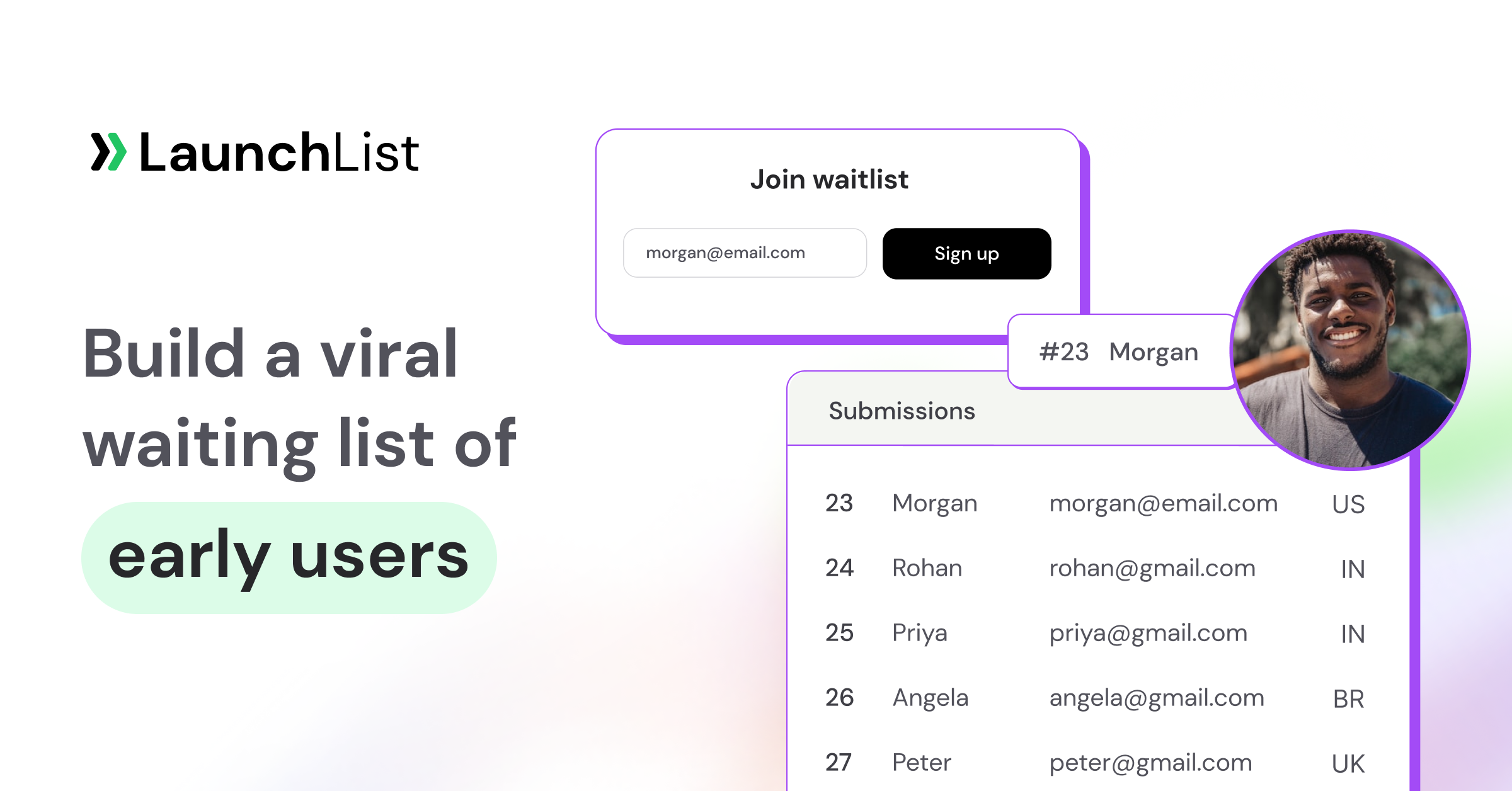
LaunchList gives you the position-queue referral loop, email confirmations, spam protection, and a hosted landing page — free for your first 100 signups. No code, no integrations, no cycle-time analytics to set up. The exact mechanic Robinhood used, in under 5 minutes.
Related reading
- 15 waitlist landing page examples that convert — real teardowns of viral pre-launch pages.
- Waitlist milestones & rewards — the mechanics that turn signups into promoters.
- Best free waitlist software (2026) — which tools actually ship a working loop.
- 12 waitlist email templates — keep your loop reinforced after signup.
- How to launch on Product Hunt (2026 guide) — turn a viral waitlist into launch-day volume.
- Free waitlist & coming soon page builder — ship your viral loop as a hosted page.